A Living Backyard
Updated: Oct 4, 2025

Jimmy and I don’t have a TV. We don’t need one. Our backyard is a nature documentary 24/7/365. It’s where we go to be entertained and to learn.
Even more, it's where we go to witness the miracles of God’s creation.
This spring and summer our little patch of the planet has been alive with birds, butterflies, moths, bees and beneficial insects--more than any time in the six years we’ve lived here in south central Pennsylvania.
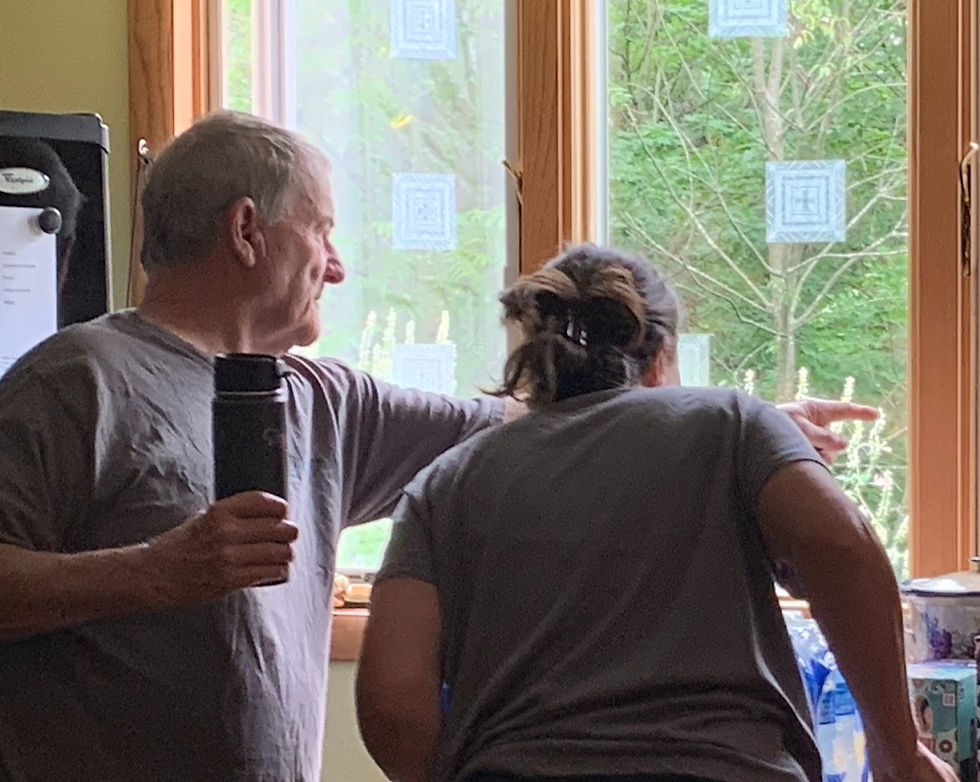
The reason it’s been so alive is simple: native plants. We saw more wildlife and insects this year because many of the native perennials we began planting in 2023 are well established now.
But there’s another reason why we got to experience more life outside this year: we notice more. Native plants teach you a new way to see the world—with curiosity, patience, respect and love.
You’re going to see a lot of photos in this blog post—many more than I usually include. That’s because I want to share with you just some of what we’ve experienced here the past five months. I’ve only been able to capture a tiny amount of the beauty we’ve seen. Sometimes I didn’t have my phone or my camera on me, and I couldn’t get a photo. But this post will give you an idea, and I hope it will inspire you to bring native plants to your yard or patio.
Also, one small disclaimer: our backyard is not everyone’s cup of tea. It’s not manicured. There are no stretches of lush, green lawn. In fact, there is a little less lawn each year, and that’s on purpose.
I like to think of our yard as well-managed wildness. It is 100% designed to provide food and shelter for birds and natural nectar for hummingbirds, bees, butterflies and other pollinators.
Jimmy’s four daughters were here in late August. They call our place their “retreat.” I’ve never received a finer compliment in my life.
Here's a look at our native plants and the abundance of new life they have brought to our backyard.
Foxglove beardtongue is the first native perennial to bloom in the spring.

It provides an early nectar source for many solitary bees such as the one shown above. This little bee is an excellent pollinator. It will carry pollen to another plant in the important process that sustains us here on earth.
I grew red columbine via winter sowing in 2024 and planted it in the spring because I had learned that it is a preferred food source for ruby throated hummingbirds. Like many native perennials, it didn't bloom the first year. But it did this year, right as the hummingbirds began to arrive in our area.
It took a while for us to see hummingbirds feeding on these blooms. We saw plenty at our feeder.

After about three weeks, they found the columbine. Do I have a photo? Of course not. But I have the memory of the joy I felt when I saw them finding these delicate blooms that lasted for nearly two months.
Our larkspur did bloom the first year in 2023, providing a cool purple contrast to other flowers in our first native bed.

This year the larkspur bloomed extravagantly. And what a gift it was. Here is just some of what was attracted to the fleurettes of this stunning native perennial.


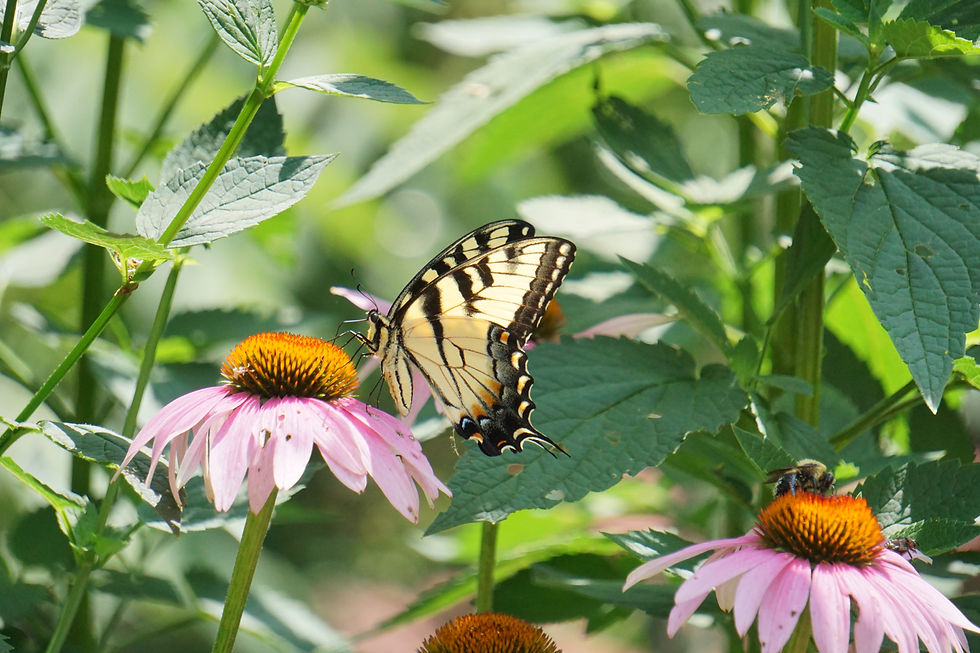
In the winter of 2024, I grew lots of giant purple hyssop seedlings outdoors in milk jugs. I planted them in the spring, and they bloomed the first year, reaching about six feet in height. This year, they doubled that height and bloomed like crazy. Look at the number of bees and eastern tiger swallowtail butterflies feeding in this one patch of hyssop.
And then there's rose milkweed, one of the native milkweeds that monarch butterflies must have in order to survive. Once you plant native milkweed, it blooms the first year, sows seeds everywhere, and you will likely have plenty of it forever. Our milkweed was lush, dense and a food and egg-laying habitat for many monarch butterflies this year.
In July and August, I stood on our back porch and watched female monarchs laying eggs on our milkweed. The first monarch to be born in our gardens this year came into the world on July 24.

I don't honestly know how many monarchs have been born here this year. We've seen twelve, but I am certain there have been many more. Here are just a few of the caterpillars that are outside in the garden now, feeding and getting ready to pupate.
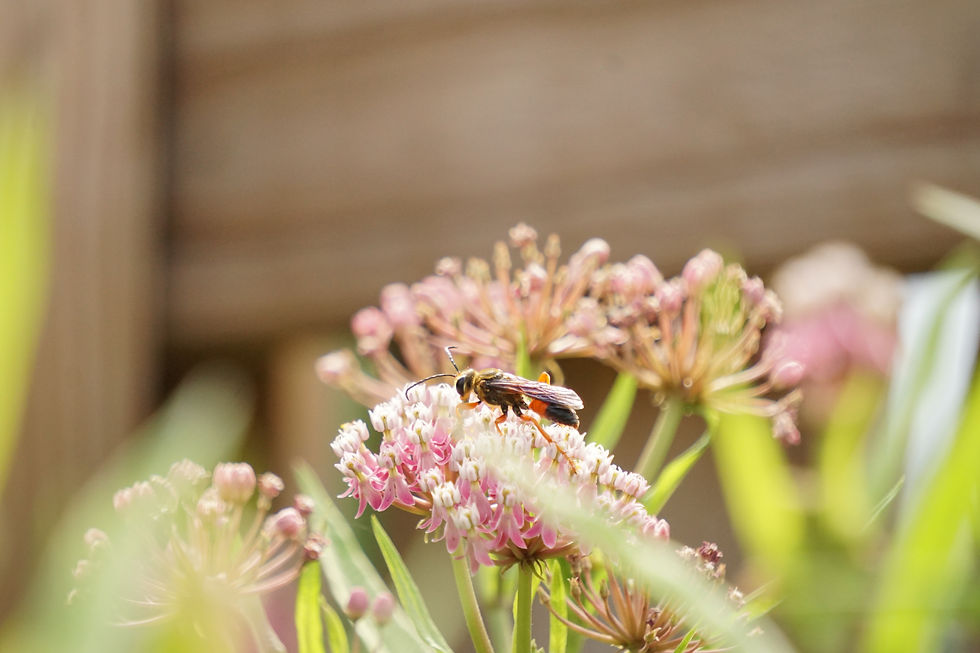
Native milkweed attracts more than monarch butterflies. It is a long-lasting food source for lots of different butterflies and beneficial insects.


Who in their right mind plants goldenrod in their garden? I do. I took this quick video today of some showy goldenrod we planted in one of our new perennial beds. With the exception of one bumblebee, these are all honeybees busy gathering pollen.
I mentioned birds earlier in this post. Our living backyard supports wild birds in ways that warrant their own blog post. But we derive immense joy in watching American goldfinches feed themselves and their young every summer on the giant purple hyssop, purple coneflowers and the annual sunflowers that pop up everywhere in our gardens from seeds that squirrels and chipmunks have sown in their busyness the previous autumn.

Black capped chickadees and American goldfinches tumble all over our sunflowers and pick each one clean, providing them with much-needed protein for breeding season and for their young. We will continue to let these flowers grow wherever the wildlife deposits the seeds.
We don't cut our perennials back in the fall. We leave them just as they are until late spring because they will provide seeds for birds all winter. Insects will make their home in the stems over the winter, emerging in the spring to feed the vibrant ecosystem we are helping to support here.
If you plant it, they will come. Of this you can be sure. And interestingly, none of this type of gardening requires any digging. We use a low-impact style of building beds called lasagna gardening. It's particularly suited for planting native perennials. I'll write about that someday. If you're interested in how to do it, reach out.
No, Jimmy and I won't be getting a TV anytime soon. For us, nothing on the most high-end 72-inch flat screen can compete with the sacred moments that happen every day in this living backyard.


Comments